Masonry & Roofing Contractors in Ellington: what to know
A harder winter than the shoreline gets
Inland and uphill from the Sound, Ellington sits in the colder half of Connecticut. More snow sits on roofs for longer, so any heat escaping into the attic produces meltwater that refreezes at the cold eave and builds an ice dam. More freeze-thaw cycles work on every mortar joint, chimney crown and concrete step. Deeper frost penetration heaves anything founded too shallow, which is why so many failed garden walls and stoops in Tolland County turn out to have been built on six inches of gravel.
This is also stone country. Fieldstone foundations, dry-laid walls and stone steps are a normal part of properties around Ellington, and they need masons who understand how a dry-laid wall actually carries load and drains, not just how to stack a face that looks right for two seasons.
Reading the condition of your masonry
You can learn a lot about a Ellington building from the ground. Run a key along a mortar joint: if it scratches out as sand, the joint is spent and the wall is taking on water. Look for joints recessed more than a few millimetres behind the face of the brick: that is a joint no longer shedding water. Look for the white bloom of efflorescence, which means water is moving through the masonry and carrying salts out with it. Look for brick faces that have popped off, exposing the softer core; that is usually the signature of frost, of a hard repointing mix, or both.
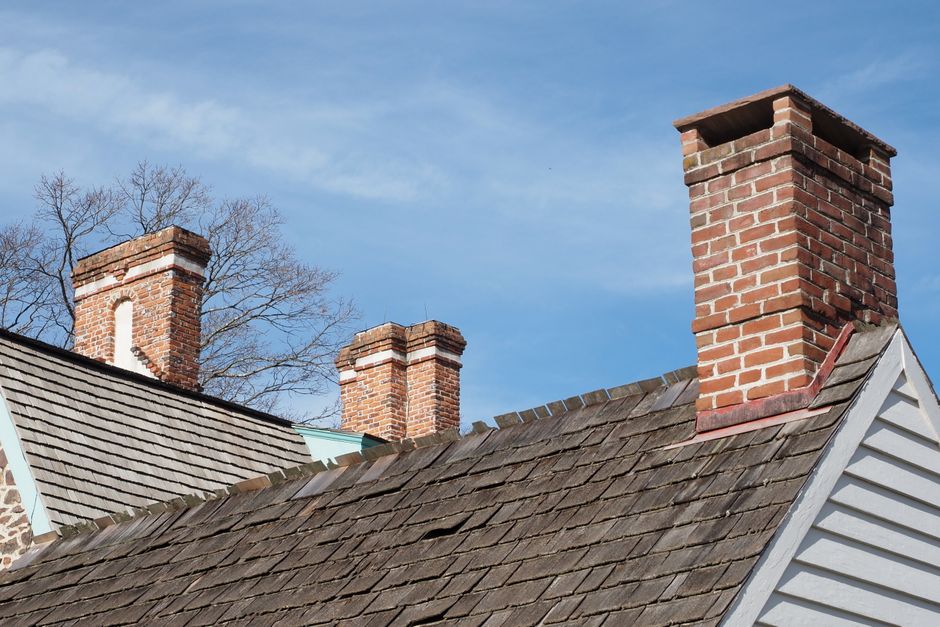
On a chimney, look at the crown from a window or with binoculars. Cracks radiating from the flue, a crown flush with the brick instead of overhanging it, and a missing flue cap are the three things that account for most chimney leaks in Connecticut.
Getting the roof detail right
Anyone quoting a re-roof on a Ellington property should be talking about more than shingles. Ask about the ice and water membrane at the eaves and in the valleys, the backstop for when an ice dam forms anyway. Ask about ventilation: balanced intake at the soffit and exhaust at the ridge keeps the deck cold and the shingles from cooking from below. Ask what happens to the chimney flashing and the vent boots, which is where the next leak will otherwise come from. And ask what happens if the deck turns out to be soft once the old covering is off, and at what price per sheet.
A quote that lists only a shingle brand and a total price is not a specification, and it makes comparing two contractors around Ellington impossible.
Permits, registration and paperwork
Permitting in Connecticut is handled town by town, so the rules that apply in Ellington are set by the local building department and can differ from a neighbouring town. As a rule of thumb, full re-roofs, structural masonry work and retaining walls above a threshold height need permits and sometimes an engineered design; small repairs usually do not. The contractor should pull the permit, and you should see it.
Separately, home improvement work on existing Connecticut homes generally requires the contractor to be registered with the state Department of Consumer Protection as a Home Improvement Contractor. Verify that registration is current before work starts, get the contract in writing, and keep every document: it is what protects you if something goes wrong later.