Chimney leak, roof leak or ice dam? 24/7 emergency line - (800) 555-0207
πŸ“ New London, CT Β· New London County

Masonry & Roofing Contractors in New London, CT

Coastal exposure is the defining factor here. Salt air, high winds and saturated winter storms attack mortar, flashing and fasteners long before the roof covering itself gives out. We list masonry and roofing contractors serving New London and the rest of New London County, Connecticut. Use this directory to find and compare local pros around New London, then get quotes on your own terms.

⚑ Fast local dispatch βœ… Local pros onlyπŸ’¬ Free quotesπŸ”Ž Google-verified reviews

Free quotes in New London

Prefer to talk now? Call (800) 555-0207

Water coming through a chimney, roof or foundation wall? Get a local pro on it today. πŸ“ž Call (800) 555-0207

Get Matched With masonry and roofing contractors in New London

Tell us what you need and we'll connect you with available local pros. Free, no obligation.

Prefer to talk now? Call (800) 555-0207

Masonry & Roofing Contractors services in New London

🧱

Chimney repair & rebuilding

Cracked crowns, spalling brick, loose top courses and leaks at the flashing, the single most common masonry call in New London.

πŸͺ¨

Tuckpointing & repointing

Cutting out eroded joints and repacking them with mortar matched to the original, so the brick is protected instead of destroyed.

πŸ—οΈ

Brick, block & stone masonry

Restoration and new work in brick, block, fieldstone and brownstone: piers, veneer, steps, stoops and chimney stacks around New London.

πŸ’§

Foundations & waterproofing

Crack injection, repointing stone foundations, interior perimeter drains, sump systems and exterior excavation and membrane work.

πŸ§—

Retaining walls, steps & walkways

Failing, bulging or leaning walls rebuilt with a proper base below frost depth, free-draining backfill and drainage that actually works.

🏠

Roofing, gutters & ice dams

Leak tracing, flashing, repairs and full re-roofs, plus the gutter, ventilation and insulation work that stops ice dams in New London.

Masonry & Roofing Contractors in New London: what to know
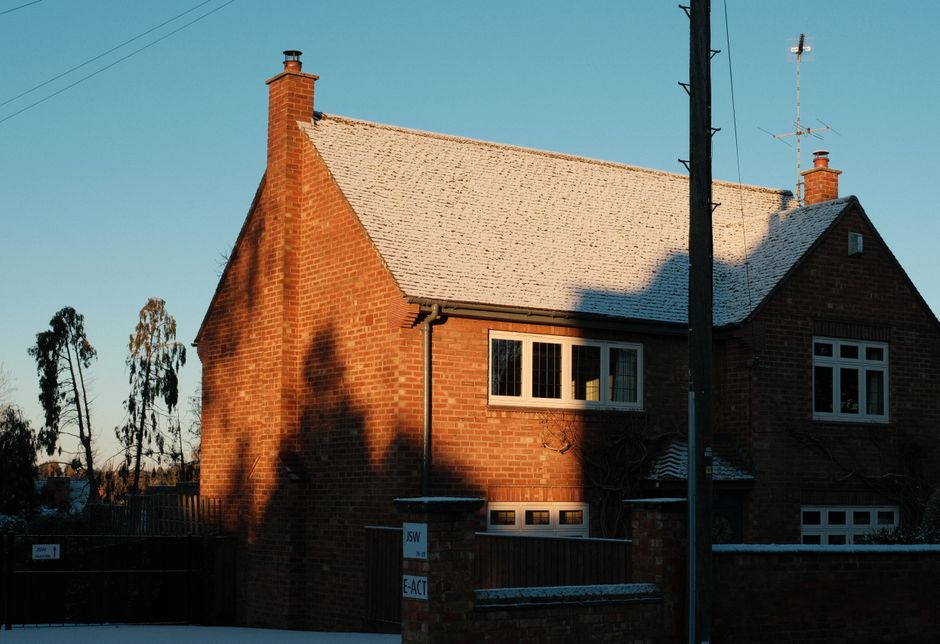
A brick house with a snow-dusted roof under morning sunlight, depicting a quiet winter scene.
Stock photograph. Snow sitting on the roof of a brick house. Not a job site in New London, and not work by any contractor listed above.

Salt air and wind-driven rain

Property within reach of the Long Island Sound in New London County lives with airborne salt. Salt is hygroscopic: it pulls moisture out of the air and holds it against the surface it has settled on. In masonry that means mortar joints stay damp longer, salts crystallise inside the pore structure and push the face off the brick, and the white efflorescence bloom on a chimney or a garden wall shows up faster than it would twenty miles inland. On the roof it means galvanised fasteners and cheap flashing corrode years early. Around New London, stainless or properly coated flashing and copper details are not an upgrade so much as basic durability.

The second coastal factor is direction. Storms coming off the water drive rain horizontally into details that handle vertical rain without complaint: chimney counter-flashing, the head of a window, a wall-to-roof junction, the top of a parapet. Leaks that only appear during a nor\'easter are almost always a wind-driven-rain problem rather than a roof-covering problem, and diagnosing them means testing one detail at a time.

Freeze-thaw is the local enemy

Connecticut sits in a temperature band that crosses freezing repeatedly through the winter rather than staying cold. That is worse for masonry than a colder, more stable climate. Each crossing takes water that has soaked into a mortar joint, a crown, a step or a spalled brick face and expands it by roughly nine percent, opening the void a fraction. Repeated forty or fifty times a season, that is what turns a hairline crack in a chimney crown into a channel, and a sound joint into an eroded one.

Around New London this shows up first on the most exposed surfaces: chimney crowns and top courses, the south and west faces of a stack, the top of a retaining wall, concrete steps and porch landings. Those are the areas worth photographing every autumn so you can see the rate of change rather than discovering it as a leak.

Where roofs and masonry meet

Most roof leaks are not roof leaks. On a New London home the water usually enters at a junction, the chimney, a wall, a dormer cheek, a skylight curb, a valley, and the junction is where masonry and roofing trades meet. That is exactly the seam where responsibility gets passed back and forth: the roofer says the chimney is failing, the mason says the flashing is wrong. Often both are true. Using a contractor comfortable with both sides of that detail, or making sure the two trades are coordinated in one scope, saves a second call in a year.

Proper chimney flashing means step flashing woven into the shingle courses, plus counter-flashing let into a cut or raked mortar joint and sealed. A bead of roof cement smeared over the junction is not flashing; it is a two-year fix that is very common on older re-roofs.

Checking out a Connecticut contractor

Contractors performing home improvement work on existing Connecticut homes are generally required to hold a Home Improvement Contractor registration with the state Department of Consumer Protection, and you can look up a registration yourself before signing anything. Connecticut also requires certain home improvement contracts to be in writing with specified terms, and maintains a Home Improvement Guaranty Fund that may help homeowners in defined circumstances, check DCP for the current requirements and eligibility rules rather than relying on what a salesperson tells you.

Beyond registration, ask any New London contractor for a certificate of insurance sent directly from their insurer, a written scope that names materials and methods rather than just a total, and references for masonry work of the same type and age. Do not pay in full up front.

8Connecticut counties covered
315CT cities, towns & villages listed
24/7Emergency call line
FreeQuotes, no obligation

Common questions in New London

Do I need a mason or a roofer for a leak around my chimney in New London?
Usually both trades are involved. The leak is often a flashing detail (roofing) combined with a cracked crown or open mortar joints (masonry). Ask whoever you call in New London whether they handle both, and if not, make sure the two scopes are coordinated so nobody leaves a gap at the junction.
What is the best time of year to do masonry work in New London?
Late spring through early autumn. Mortar and concrete need temperatures reliably above roughly 40Β°F to cure properly, so repointing, crown pours and wall rebuilds in New London are seasonal work. Emergency stabilisation can be done any time; permanent masonry generally cannot.
How do I know whether my chimney needs repointing or rebuilding?
If the brick units are sound and only the joints have eroded, repointing is the repair. If the top courses are loose, the brick faces have spalled off, or the stack leans, the section above the roofline usually needs rebuilding. A New London mason should show you photographs of the top of the stack, not just describe it.
Why does my basement leak only in the spring?
Because spring combines snowmelt, saturated ground and thawing frost, which is when hydrostatic pressure against a New London foundation peaks. It usually means water is being delivered to the wall, blocked gutters, a downspout discharging at the foundation, or grade sloping toward the house, rather than that the wall has suddenly failed.
Are quotes and assessments free?
The contractors listed here set their own terms, but free estimates are common for masonry and roofing work in New London. Using this directory and requesting quotes through it costs nothing and carries no obligation. Confirm before booking whether a diagnostic visit, a hose test or a chimney camera inspection, for example, is charged separately.
How do I check that a contractor is properly registered in Connecticut?
Contractors doing home improvement work on existing homes in New London generally need a Home Improvement Contractor registration with the Connecticut Department of Consumer Protection. You can verify a registration through DCP, and you should also ask for a certificate of insurance sent directly by the insurer.

Also serving near New London

All of New London County β†’

πŸ“ž Call now: (800) 555-0207