Chimney leak, roof leak or ice dam? 24/7 emergency line - (800) 555-0207
πŸ“ Orange, CT Β· New Haven County

Masonry & Roofing Contractors in Orange, CT

Masonry and roofing near the Long Island Sound take a beating that inland work does not: salt-laden air, wind-driven rain off the water and a shorter but wetter freeze cycle. We list masonry and roofing contractors serving Orange and the rest of New Haven County, Connecticut. Browse contractors working in and around Orange and ask for a written assessment before you commit to anything.

⚑ Fast local dispatch βœ… Local pros onlyπŸ’¬ Free quotesπŸ”Ž Google-verified reviews

Free quotes in Orange

Prefer to talk now? Call (800) 555-0207

Water coming through a chimney, roof or foundation wall? Get a local pro on it today. πŸ“ž Call (800) 555-0207

Get Matched With masonry and roofing contractors in Orange

Tell us what you need and we'll connect you with available local pros. Free, no obligation.

Prefer to talk now? Call (800) 555-0207

Masonry & Roofing Contractors services in Orange

🧱

Chimney repair & rebuilding

Cracked crowns, spalling brick, loose top courses and leaks at the flashing, the single most common masonry call in Orange.

πŸͺ¨

Tuckpointing & repointing

Cutting out eroded joints and repacking them with mortar matched to the original, so the brick is protected instead of destroyed.

πŸ—οΈ

Brick, block & stone masonry

Restoration and new work in brick, block, fieldstone and brownstone: piers, veneer, steps, stoops and chimney stacks around Orange.

πŸ’§

Foundations & waterproofing

Crack injection, repointing stone foundations, interior perimeter drains, sump systems and exterior excavation and membrane work.

πŸ§—

Retaining walls, steps & walkways

Failing, bulging or leaning walls rebuilt with a proper base below frost depth, free-draining backfill and drainage that actually works.

🏠

Roofing, gutters & ice dams

Leak tracing, flashing, repairs and full re-roofs, plus the gutter, ventilation and insulation work that stops ice dams in Orange.

Masonry & Roofing Contractors in Orange: what to know
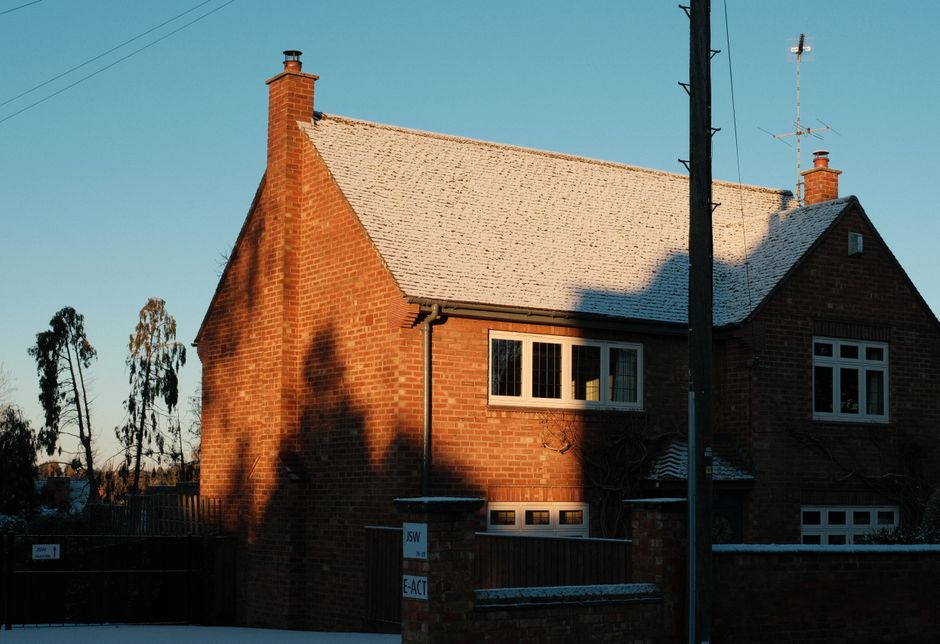
A brick house with a snow-dusted roof under morning sunlight, depicting a quiet winter scene.
Stock photograph. Snow sitting on the roof of a brick house. Not a job site in Orange, and not work by any contractor listed above.

What the Sound does to buildings

Exposure to the Sound shortens the life of everything on the outside of a Orange building. Salt spray and salt-laden fog keep mortar joints wet, accelerate corrosion on flashing, fasteners and gutter hardware, and drive the crystallisation cycle that spalls the faces off brick and brownstone. It is why two identical chimneys, one in New Haven County near the shore and one thirty miles north, age at very different rates.

Wind is the other half of it. Coastal Connecticut regularly sees storm winds that push rain sideways and lift the seal strips on asphalt shingles without removing them, leaving a roof that looks intact and is no longer watertight. When a Orange homeowner reports a leak that only appears in a particular storm direction, an experienced contractor starts at the flashing on that elevation rather than in the field of the roof.

Why mortar fails first

Mortar is meant to be the weak link. It is softer than the brick or stone it beds, so movement, salt and frost damage the joint rather than the unit, and a joint is easy to replace where a spalled brick face is not. That is the theory. In practice, once a joint has eroded back a quarter inch or more, it stops shedding water and starts collecting it, and the freeze-thaw cycle takes over: water enters, freezes, expands by about nine percent, and levers the joint wider. Cut back and repointed at the right moment, the wall lasts another few decades. Left another five winters, the same wall needs rebuilding.

The mistake that does the most damage in Orange is repointing old soft-mortar masonry with hard Portland-cement mortar. When the joint is harder than the brick, thermal movement and freezing water blow the faces off the brick instead of the mortar. Ask what mix a contractor intends to use on a pre-1930s building and expect a real answer.

Repair or replace

The honest answer on a Orange roof depends on what the deck and the details look like, not on the age alone. A single cracked vent boot collar, a length of failed valley metal or displaced step flashing on an otherwise sound roof is a repair, and a contractor pushing a full replacement for it is worth a second opinion. On the other side, widespread granule loss with bare mat showing, shingles that crack when they are lifted, multiple existing layers, or a deck that flexes underfoot all point toward replacement.

Ask for photographs of the actual conditions rather than a verbal summary. A contractor who will not show you what they saw up there is telling you something.

Permits, registration and paperwork

Permitting in Connecticut is handled town by town, so the rules that apply in Orange are set by the local building department and can differ from a neighbouring town. As a rule of thumb, full re-roofs, structural masonry work and retaining walls above a threshold height need permits and sometimes an engineered design; small repairs usually do not. The contractor should pull the permit, and you should see it.

Separately, home improvement work on existing Connecticut homes generally requires the contractor to be registered with the state Department of Consumer Protection as a Home Improvement Contractor. Verify that registration is current before work starts, get the contract in writing, and keep every document: it is what protects you if something goes wrong later.

8Connecticut counties covered
315CT cities, towns & villages listed
24/7Emergency call line
FreeQuotes, no obligation

Common questions in Orange

Do I need a mason or a roofer for a leak around my chimney in Orange?
Usually both trades are involved. The leak is often a flashing detail (roofing) combined with a cracked crown or open mortar joints (masonry). Ask whoever you call in Orange whether they handle both, and if not, make sure the two scopes are coordinated so nobody leaves a gap at the junction.
What is the best time of year to do masonry work in Orange?
Late spring through early autumn. Mortar and concrete need temperatures reliably above roughly 40Β°F to cure properly, so repointing, crown pours and wall rebuilds in Orange are seasonal work. Emergency stabilisation can be done any time; permanent masonry generally cannot.
How do I know whether my chimney needs repointing or rebuilding?
If the brick units are sound and only the joints have eroded, repointing is the repair. If the top courses are loose, the brick faces have spalled off, or the stack leans, the section above the roofline usually needs rebuilding. A Orange mason should show you photographs of the top of the stack, not just describe it.
Why does my basement leak only in the spring?
Because spring combines snowmelt, saturated ground and thawing frost, which is when hydrostatic pressure against a Orange foundation peaks. It usually means water is being delivered to the wall, blocked gutters, a downspout discharging at the foundation, or grade sloping toward the house, rather than that the wall has suddenly failed.
Are quotes and assessments free?
The contractors listed here set their own terms, but free estimates are common for masonry and roofing work in Orange. Using this directory and requesting quotes through it costs nothing and carries no obligation. Confirm before booking whether a diagnostic visit, a hose test or a chimney camera inspection, for example, is charged separately.
How do I check that a contractor is properly registered in Connecticut?
Contractors doing home improvement work on existing homes in Orange generally need a Home Improvement Contractor registration with the Connecticut Department of Consumer Protection. You can verify a registration through DCP, and you should also ask for a certificate of insurance sent directly by the insurer.

Also serving near Orange

All of New Haven County β†’

πŸ“ž Call now: (800) 555-0207