Masonry & Roofing Contractors in Woodbridge: what to know
Snow load, frost depth and stone
The higher ground of New Haven County gets a longer, colder winter than the shoreline, and it shows in the work. Snow accumulates on roofs and stays there, which drives ice dams wherever an attic leaks heat. Frost drives deeper into the ground, which is why footings and retaining wall bases around Woodbridge have to go below frost depth or they will heave. And the freeze-thaw count, the number of times a year that water in a mortar joint freezes and expands, is higher here than anywhere on the coast. Every one of those cycles opens a joint fractionally wider.
The terrain also means stonework is everywhere: fieldstone foundations, dry-laid walls along old property lines, stone steps and terraces cut into slopes. Much of it is a century or more old and worth restoring properly. A mason who works with stone around Woodbridge should be able to tell you which stones are still sound, whether a wall needs resetting or full rebuilding, and what the drainage behind it should look like.
Reading the condition of your masonry
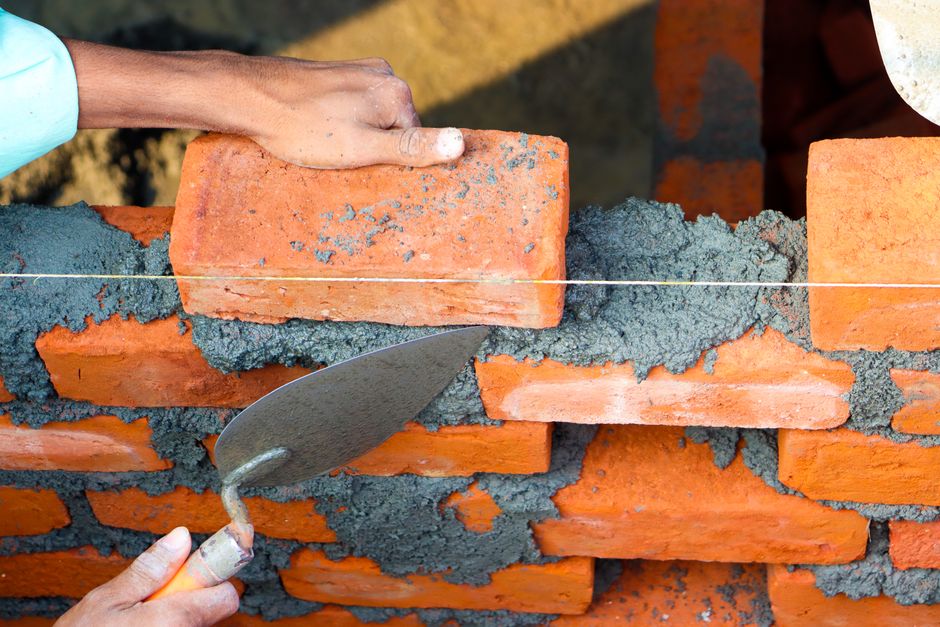
You can learn a lot about a Woodbridge building from the ground. Run a key along a mortar joint: if it scratches out as sand, the joint is spent and the wall is taking on water. Look for joints recessed more than a few millimetres behind the face of the brick: that is a joint no longer shedding water. Look for the white bloom of efflorescence, which means water is moving through the masonry and carrying salts out with it. Look for brick faces that have popped off, exposing the softer core; that is usually the signature of frost, of a hard repointing mix, or both.
On a chimney, look at the crown from a window or with binoculars. Cracks radiating from the flue, a crown flush with the brick instead of overhanging it, and a missing flue cap are the three things that account for most chimney leaks in Connecticut.
Repair or replace
The honest answer on a Woodbridge roof depends on what the deck and the details look like, not on the age alone. A single cracked vent boot collar, a length of failed valley metal or displaced step flashing on an otherwise sound roof is a repair, and a contractor pushing a full replacement for it is worth a second opinion. On the other side, widespread granule loss with bare mat showing, shingles that crack when they are lifted, multiple existing layers, or a deck that flexes underfoot all point toward replacement.
Ask for photographs of the actual conditions rather than a verbal summary. A contractor who will not show you what they saw up there is telling you something.
Before you sign
Get at least two written scopes for any significant masonry or roofing job in Woodbridge, and compare what is actually in them, not just the totals. A real scope names the mortar mix or the shingle system, the flashing material, what happens to unforeseen deck or substrate damage, the drainage detail behind a wall, and the clean-up and disposal. Two quotes that differ by thousands usually differ in what is excluded.
Check that the contractor holds a current Connecticut Home Improvement Contractor registration with the Department of Consumer Protection, ask for proof of liability and workers\' compensation insurance directly from the insurer, confirm who is pulling the permit with the local building department, and make sure the payment schedule is tied to progress rather than front-loaded.