Masonry & Roofing Contractors in Enfield: what to know
Water, clay and old brick in the valley
The Connecticut River valley through Hartford County left behind fine-grained, poorly draining soils and, in many places, a high seasonal water table. That is a foundation story more than a roof story: water sits against basement walls after every thaw and every heavy rain, freezes in the backfill in winter and pushes inward, and finds any crack or any un-parged joint. Homes around Enfield with recurring spring basement water usually have a drainage problem outside, gutters, downspout discharge, grading, long before they have a foundation problem.
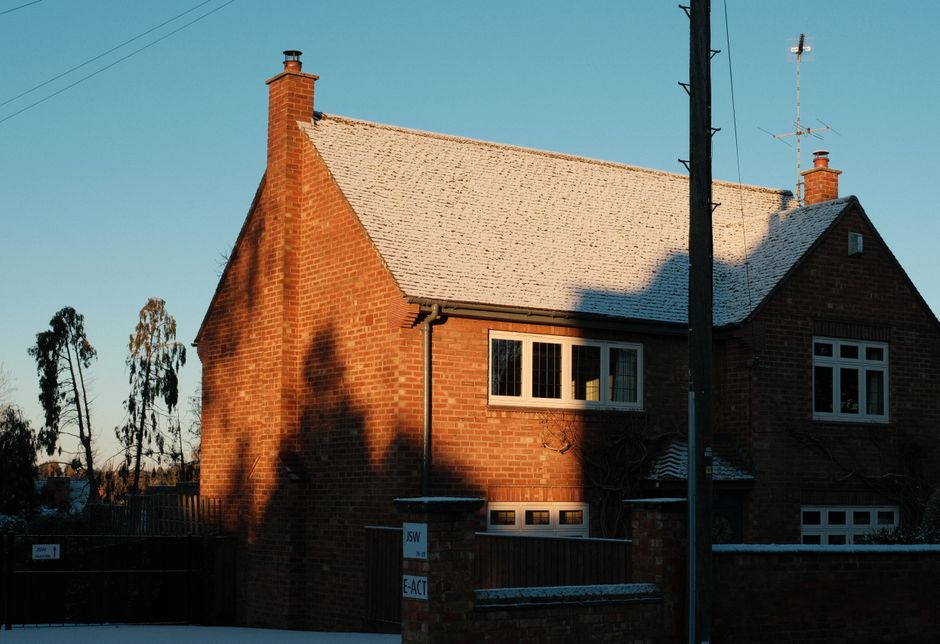
The valley also holds a dense concentration of 19th and early 20th century brick: mill housing, three-deckers, brick commercial blocks and thousands of brick chimneys. That masonry was laid in soft lime mortar designed to be the sacrificial element. Repointing it with hard modern Portland-cement mortar looks tidy and then destroys the brick, because the joint becomes stronger than the unit and the movement has to go somewhere. Matching mortar to the original is a real skill, and it is worth asking a Enfield mason directly what mix they intend to use.
Reading the condition of your masonry
You can learn a lot about a Enfield building from the ground. Run a key along a mortar joint: if it scratches out as sand, the joint is spent and the wall is taking on water. Look for joints recessed more than a few millimetres behind the face of the brick: that is a joint no longer shedding water. Look for the white bloom of efflorescence, which means water is moving through the masonry and carrying salts out with it. Look for brick faces that have popped off, exposing the softer core; that is usually the signature of frost, of a hard repointing mix, or both.
On a chimney, look at the crown from a window or with binoculars. Cracks radiating from the flue, a crown flush with the brick instead of overhanging it, and a missing flue cap are the three things that account for most chimney leaks in Connecticut.
Repair or replace
The honest answer on a Enfield roof depends on what the deck and the details look like, not on the age alone. A single cracked vent boot collar, a length of failed valley metal or displaced step flashing on an otherwise sound roof is a repair, and a contractor pushing a full replacement for it is worth a second opinion. On the other side, widespread granule loss with bare mat showing, shingles that crack when they are lifted, multiple existing layers, or a deck that flexes underfoot all point toward replacement.
Ask for photographs of the actual conditions rather than a verbal summary. A contractor who will not show you what they saw up there is telling you something.
Permits, registration and paperwork
Permitting in Connecticut is handled town by town, so the rules that apply in Enfield are set by the local building department and can differ from a neighbouring town. As a rule of thumb, full re-roofs, structural masonry work and retaining walls above a threshold height need permits and sometimes an engineered design; small repairs usually do not. The contractor should pull the permit, and you should see it.
Separately, home improvement work on existing Connecticut homes generally requires the contractor to be registered with the state Department of Consumer Protection as a Home Improvement Contractor. Verify that registration is current before work starts, get the contract in writing, and keep every document: it is what protects you if something goes wrong later.