Masonry & Roofing Contractors in Thomaston: what to know
A harder winter than the shoreline gets
Inland and uphill from the Sound, Thomaston sits in the colder half of Connecticut. More snow sits on roofs for longer, so any heat escaping into the attic produces meltwater that refreezes at the cold eave and builds an ice dam. More freeze-thaw cycles work on every mortar joint, chimney crown and concrete step. Deeper frost penetration heaves anything founded too shallow, which is why so many failed garden walls and stoops in Litchfield County turn out to have been built on six inches of gravel.
This is also stone country. Fieldstone foundations, dry-laid walls and stone steps are a normal part of properties around Thomaston, and they need masons who understand how a dry-laid wall actually carries load and drains, not just how to stack a face that looks right for two seasons.
Why mortar fails first
Mortar is meant to be the weak link. It is softer than the brick or stone it beds, so movement, salt and frost damage the joint rather than the unit, and a joint is easy to replace where a spalled brick face is not. That is the theory. In practice, once a joint has eroded back a quarter inch or more, it stops shedding water and starts collecting it, and the freeze-thaw cycle takes over: water enters, freezes, expands by about nine percent, and levers the joint wider. Cut back and repointed at the right moment, the wall lasts another few decades. Left another five winters, the same wall needs rebuilding.
The mistake that does the most damage in Thomaston is repointing old soft-mortar masonry with hard Portland-cement mortar. When the joint is harder than the brick, thermal movement and freezing water blow the faces off the brick instead of the mortar. Ask what mix a contractor intends to use on a pre-1930s building and expect a real answer.
Where roofs and masonry meet
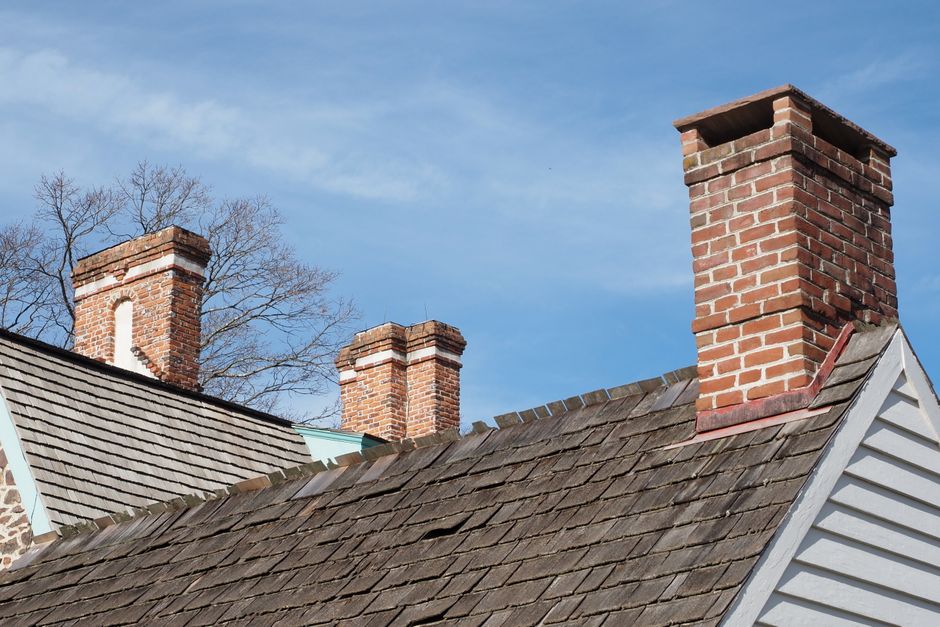
Most roof leaks are not roof leaks. On a Thomaston home the water usually enters at a junction, the chimney, a wall, a dormer cheek, a skylight curb, a valley, and the junction is where masonry and roofing trades meet. That is exactly the seam where responsibility gets passed back and forth: the roofer says the chimney is failing, the mason says the flashing is wrong. Often both are true. Using a contractor comfortable with both sides of that detail, or making sure the two trades are coordinated in one scope, saves a second call in a year.
Proper chimney flashing means step flashing woven into the shingle courses, plus counter-flashing let into a cut or raked mortar joint and sealed. A bead of roof cement smeared over the junction is not flashing; it is a two-year fix that is very common on older re-roofs.
Permits, registration and paperwork
Permitting in Connecticut is handled town by town, so the rules that apply in Thomaston are set by the local building department and can differ from a neighbouring town. As a rule of thumb, full re-roofs, structural masonry work and retaining walls above a threshold height need permits and sometimes an engineered design; small repairs usually do not. The contractor should pull the permit, and you should see it.
Separately, home improvement work on existing Connecticut homes generally requires the contractor to be registered with the state Department of Consumer Protection as a Home Improvement Contractor. Verify that registration is current before work starts, get the contract in writing, and keep every document: it is what protects you if something goes wrong later.