Masonry & Roofing Contractors in West Simsbury: what to know
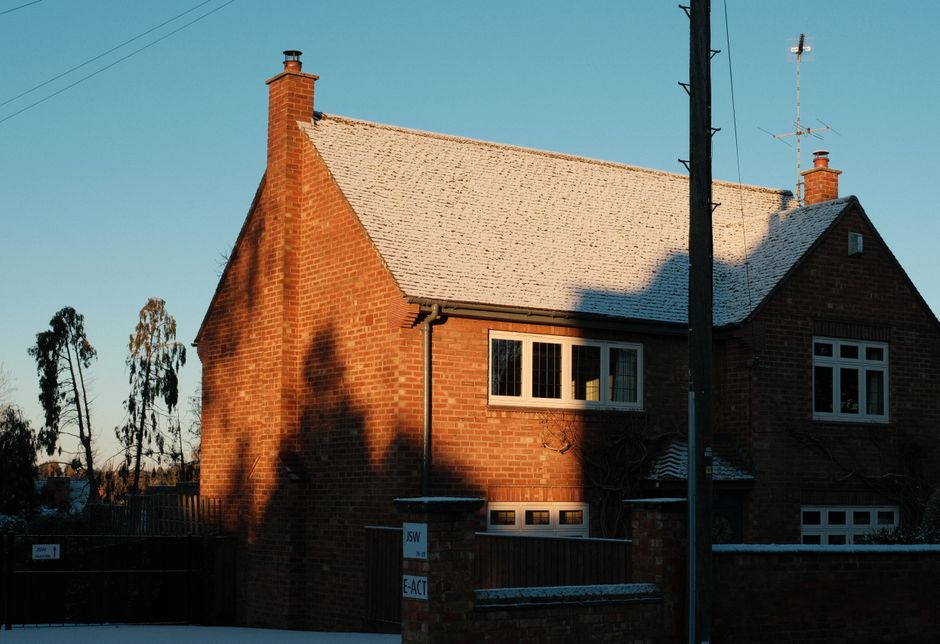
Water, clay and old brick in the valley
The Connecticut River valley through Hartford County left behind fine-grained, poorly draining soils and, in many places, a high seasonal water table. That is a foundation story more than a roof story: water sits against basement walls after every thaw and every heavy rain, freezes in the backfill in winter and pushes inward, and finds any crack or any un-parged joint. Homes around West Simsbury with recurring spring basement water usually have a drainage problem outside, gutters, downspout discharge, grading, long before they have a foundation problem.
The valley also holds a dense concentration of 19th and early 20th century brick: mill housing, three-deckers, brick commercial blocks and thousands of brick chimneys. That masonry was laid in soft lime mortar designed to be the sacrificial element. Repointing it with hard modern Portland-cement mortar looks tidy and then destroys the brick, because the joint becomes stronger than the unit and the movement has to go somewhere. Matching mortar to the original is a real skill, and it is worth asking a West Simsbury mason directly what mix they intend to use.
Freeze-thaw is the local enemy
Connecticut sits in a temperature band that crosses freezing repeatedly through the winter rather than staying cold. That is worse for masonry than a colder, more stable climate. Each crossing takes water that has soaked into a mortar joint, a crown, a step or a spalled brick face and expands it by roughly nine percent, opening the void a fraction. Repeated forty or fifty times a season, that is what turns a hairline crack in a chimney crown into a channel, and a sound joint into an eroded one.
Around West Simsbury this shows up first on the most exposed surfaces: chimney crowns and top courses, the south and west faces of a stack, the top of a retaining wall, concrete steps and porch landings. Those are the areas worth photographing every autumn so you can see the rate of change rather than discovering it as a leak.
Where roofs and masonry meet
Most roof leaks are not roof leaks. On a West Simsbury home the water usually enters at a junction, the chimney, a wall, a dormer cheek, a skylight curb, a valley, and the junction is where masonry and roofing trades meet. That is exactly the seam where responsibility gets passed back and forth: the roofer says the chimney is failing, the mason says the flashing is wrong. Often both are true. Using a contractor comfortable with both sides of that detail, or making sure the two trades are coordinated in one scope, saves a second call in a year.
Proper chimney flashing means step flashing woven into the shingle courses, plus counter-flashing let into a cut or raked mortar joint and sealed. A bead of roof cement smeared over the junction is not flashing; it is a two-year fix that is very common on older re-roofs.
Checking out a Connecticut contractor
Contractors performing home improvement work on existing Connecticut homes are generally required to hold a Home Improvement Contractor registration with the state Department of Consumer Protection, and you can look up a registration yourself before signing anything. Connecticut also requires certain home improvement contracts to be in writing with specified terms, and maintains a Home Improvement Guaranty Fund that may help homeowners in defined circumstances, check DCP for the current requirements and eligibility rules rather than relying on what a salesperson tells you.
Beyond registration, ask any West Simsbury contractor for a certificate of insurance sent directly from their insurer, a written scope that names materials and methods rather than just a total, and references for masonry work of the same type and age. Do not pay in full up front.