Masonry & Roofing Contractors in Windsor: what to know
Old masonry and a high water table
Around Windsor the two jobs that come up again and again are basement water and chimney work, and both trace back to the same valley geology and the same building era. Heavy soils hold water against foundations instead of letting it drain away, so hydrostatic pressure builds after storms and thaws and works on every shrinkage crack and every mortar joint in a stone wall.
Above ground, Hartford County has an old and largely masonry-chimneyed housing stock. Brick chimneys from the 1800s and early 1900s were built with lime mortar and often without the concrete crown detail we now consider standard. After a century of freeze-thaw, the top courses are loose, the crown is cracked or missing, and water is running down inside the chase. That is a repointing and crown job if it is caught in time and a rebuild above the roofline if it is not.
Why mortar fails first
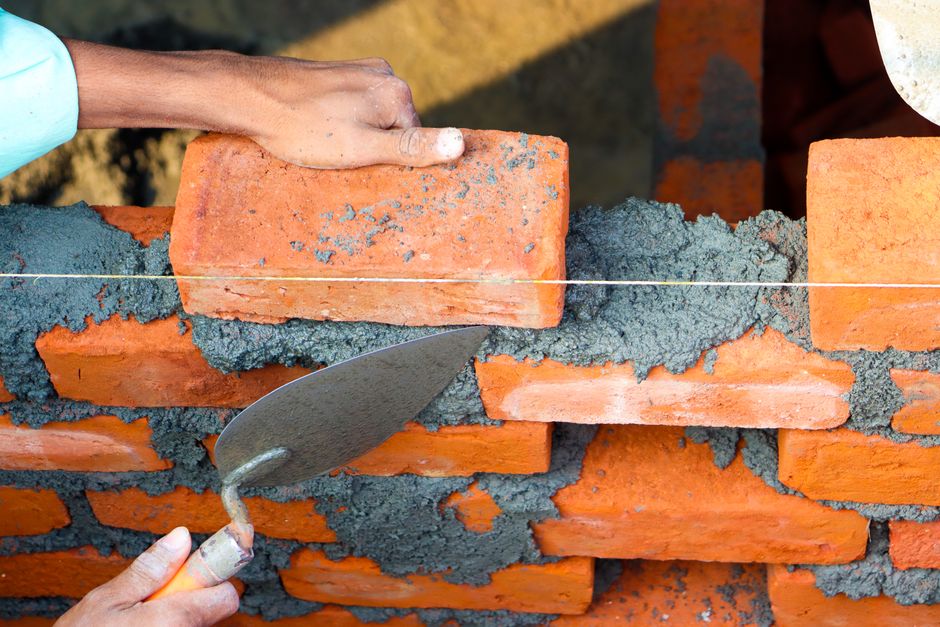
Mortar is meant to be the weak link. It is softer than the brick or stone it beds, so movement, salt and frost damage the joint rather than the unit, and a joint is easy to replace where a spalled brick face is not. That is the theory. In practice, once a joint has eroded back a quarter inch or more, it stops shedding water and starts collecting it, and the freeze-thaw cycle takes over: water enters, freezes, expands by about nine percent, and levers the joint wider. Cut back and repointed at the right moment, the wall lasts another few decades. Left another five winters, the same wall needs rebuilding.
The mistake that does the most damage in Windsor is repointing old soft-mortar masonry with hard Portland-cement mortar. When the joint is harder than the brick, thermal movement and freezing water blow the faces off the brick instead of the mortar. Ask what mix a contractor intends to use on a pre-1930s building and expect a real answer.
Getting the roof detail right
Anyone quoting a re-roof on a Windsor property should be talking about more than shingles. Ask about the ice and water membrane at the eaves and in the valleys, the backstop for when an ice dam forms anyway. Ask about ventilation: balanced intake at the soffit and exhaust at the ridge keeps the deck cold and the shingles from cooking from below. Ask what happens to the chimney flashing and the vent boots, which is where the next leak will otherwise come from. And ask what happens if the deck turns out to be soft once the old covering is off, and at what price per sheet.
A quote that lists only a shingle brand and a total price is not a specification, and it makes comparing two contractors around Windsor impossible.
Permits, registration and paperwork
Permitting in Connecticut is handled town by town, so the rules that apply in Windsor are set by the local building department and can differ from a neighbouring town. As a rule of thumb, full re-roofs, structural masonry work and retaining walls above a threshold height need permits and sometimes an engineered design; small repairs usually do not. The contractor should pull the permit, and you should see it.
Separately, home improvement work on existing Connecticut homes generally requires the contractor to be registered with the state Department of Consumer Protection as a Home Improvement Contractor. Verify that registration is current before work starts, get the contract in writing, and keep every document: it is what protects you if something goes wrong later.